

Glass etching accuracy requirements: influencing factors and industry standard analysis
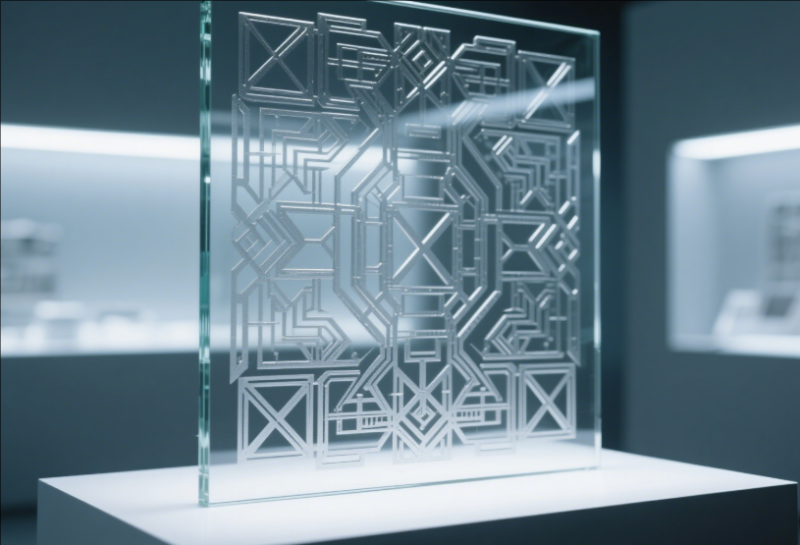
Glass etching is a common precision processing technology, which is widely used in semiconductor, optics, automotive, consumer electronics and other fields. With the continuous development of science and technology, the requirements for glass etching precision are also increasing. Especially in some high-end manufacturing fields, precision not only relates to product quality, but also directly affects function realization and production efficiency. Therefore, understanding the requirements and influencing factors of glass etching accuracy is crucial for manufacturing enterprises to improve product quality and market competitiveness.
1、 Basic Concept and Technology of Glass Etching
Glass etching is to etch the glass surface by chemical or physical methods, remove some materials, and form accurate patterns, structures or surface characteristics. Common etching methods include chemical etching, laser etching and ion beam etching. In these methods, the precision of etching is the key factor to determine the processing effect, involving the details of patterns, the uniformity of depth and the control of etching rate.
- chemical etch : The etchant reacts with the glass surface to remove the glass surface layer by layer. Its precision is affected by many factors, such as the nature of etching solution, reaction time and temperature.
- laser ablation : Precisely heat the glass surface by high-energy laser beam, so as to evaporate or ablate local materials. This method can usually achieve high accuracy, and is suitable for the processing of micro – and even nano scale patterns.
- Ion beam etching : High energy ions bombard the glass surface to remove substances and carve patterns. This method has high precision, and is often used in situations where extremely high machining precision is required.
2、 Precision requirements for glass etching
In different application fields, the precision requirements for glass etching are different, but in general, the precision requirements mainly focus on the following aspects:
- Pattern details : Glass etching is often used to produce micro patterns, such as optical components, semiconductor masks, sensors, etc. For these applications, the details of patterns are often required to reach the micron level or even smaller accuracy. In the production of high-resolution displays, sensors and optical elements, etching accuracy has a direct impact on the clarity and accuracy of patterns.
- Etching depth and uniformity : Etching depth requirements are particularly important for functional components. For example, in the field of optics, the uniformity of etching depth is directly related to the transparency, reflectivity and other performance indicators of glass. In the semiconductor field, the depth requirements of etching affect the performance and stability of devices, especially among all levels of the manufacturing process, it is necessary to maintain very high depth uniformity.
- Micro aperture and precision structure Some high-end products, such as microfluidic chips and micro sensors, have high requirements for etching accuracy. The manufacture of micro aperture requires extremely high machining precision, otherwise it will affect the use effect and reliability of the product. In these applications, the precision usually needs to reach several micrometers or even nanometer level.
- Edge smoothness During etching, the edge smoothness of glass surface is also an important factor affecting product quality. Rough edges will lead to functional failure or increase material loss, especially in optical and electronic devices requiring high-precision processing, smooth edges are essential.
3、 Factors affecting etching precision of glass
Glass etching accuracy is affected by many factors. Understanding these factors is crucial to improve production efficiency and ensure product quality. The main influencing factors include:
- Selection of etching method : Different etching methods have different effects on precision. Laser etching can usually provide higher accuracy, especially in pattern details and depth control, while chemical etching may cause slightly different etching accuracy due to the diffusion of reaction fluid and non-uniformity of etching rate.
- Accuracy of processing equipment : The precision of the equipment used for glass etching directly determines the final result of processing. Advanced laser etching equipment and ion beam etching equipment have higher precision control capability, and can complete high-precision processing in a relatively short time.
- Material properties : The type, hardness, thickness and other factors of glass will affect the etching effect. For example, some special types of glass may be more difficult to etch, or may exhibit lower etching accuracy under certain etching conditions.
- Etching liquid or gas formula : In the chemical etching process, the concentration of etchant, temperature, reaction time and other parameters will affect the accuracy of etching. The etching accuracy can be significantly improved by optimizing the etching solution formulation and controlling its reaction environment.
- Optimization of etching parameters For example, etching time, temperature, laser power, etc. are all important factors affecting the accuracy. Optimizing these parameters can effectively improve the accuracy and consistency of the etching process.
4、 Industry standards and future trends
With the development of technology and the change of market demand, the precision of glass etching is required to be higher and higher. Especially in the fields of semiconductor, medical devices and optics, the requirements for etching accuracy are becoming increasingly stringent. The formulation of industry standards is moving towards higher accuracy and more intelligence. The following are the development trends in the future:
- Realization of nanometer precision : With the development of nanotechnology, the precision requirements of glass etching will be further improved. In the future, glass etching may need to achieve nanoscale pattern and depth accuracy, which puts forward higher requirements for processing technology.
- Intelligent and automatic control With the progress of artificial intelligence and automation technology, the precision control of glass etching will be more precise and intelligent. By introducing machine learning and real-time monitoring technology, etching parameters can be optimized in real time during production, thus improving production efficiency and accuracy.
- Environmental protection and green technology In the future, environmental protection and green technology will become the main development direction of glass etching industry. Using more environmentally friendly etching solutions and processes to reduce the emission of harmful gases and wastes will become the focus of industry development.
5、 Conclusion
The precision requirement of glass etching is not only a technical challenge, but also an important foundation for many industries to achieve high-quality production and innovation. Precise etching technology plays a vital role in semiconductor, optics, medical, consumer electronics and other fields. With the continuous progress of technology, the precision requirements of glass etching will continue to improve, promoting the industry to develop towards higher standards and higher precision.