

Technical challenges and application exploration of welding sapphire glass and stainless steel
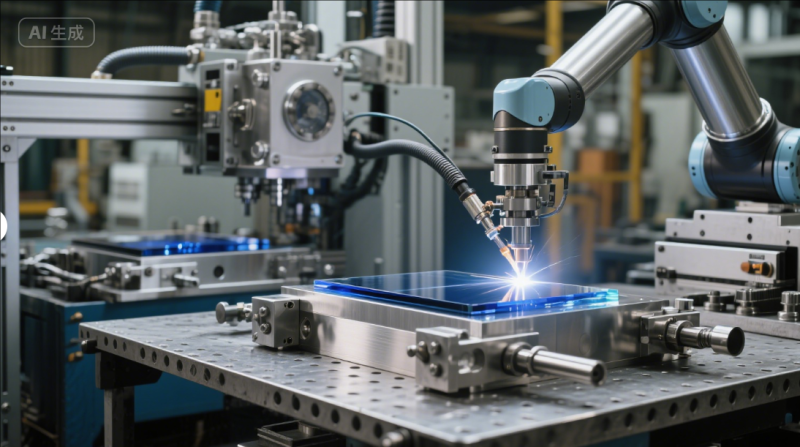
With the continuous progress of high-tech industry, the application of welding technology in a variety of materials has become increasingly important. Especially in the welding process of sapphire glass and stainless steel, the technology is difficult, involving the special properties of materials and high requirements of welding process. Sapphire glass is widely used in electronics, optics and other fields due to its excellent hardness and transparency, while stainless steel has become a common material in construction, chemical and other industries due to its good corrosion resistance and mechanical properties. This paper will focus on the technical challenges, solutions and application fields of the welding of sapphire glass and stainless steel.
1、 Material Properties of Sapphire Glass and Stainless Steel
- Sapphire glass: Sapphire glass is a transparent material with stable crystal structure and high hardness. It is usually used in high-end optical elements, LED displays, watch glass, and other environments that require scratch resistance and high temperature resistance. Its Mohs hardness is 9, second only to diamonds. Therefore, during welding, sapphire glass shows strong resistance to changes in heat and force.
- stainless steel: Stainless steel is an alloy steel, mainly composed of iron, carbon and at least 10.5% chromium. It has good corrosion resistance and strength, and has high adaptability in many industrial applications. Due to its high temperature stability and good weldability, stainless steel is often combined with other materials to enhance its physical properties.
2、 Analysis of welding difficulties
- Thermal expansion coefficient difference: The thermal expansion coefficient of sapphire glass is different from that of stainless steel. The expansion coefficient of sapphire glass is low, while that of stainless steel is high. During heating and cooling, this difference will cause stress on the interface between the two, which may lead to crack or fracture. This is the most difficult technical problem to be solved in the welding process.
- Welding process selection: For welding sapphire glass and stainless steel, common welding processes include laser welding, brazing and ultrasonic welding. Laser welding can achieve more accurate local heating, but because of its small heat affected zone, it is not fully adapted to the thermal expansion difference between the two materials. Although brazing can effectively solve the problem of material mismatch, its joint strength is low, and is vulnerable to high temperature and external forces. Although ultrasonic welding is suitable for soft materials, it is not ideal for the application between high hardness sapphire glass and hard stainless steel.
- Joint strength and stability: The strength and stability of welded joint is the key to evaluate the welding quality. Due to the brittleness of sapphire glass, once the welding interface is uneven or the force is uneven, it is easy to cause the fracture of the joint. The toughness of stainless steel makes it have a certain buffer effect in the welding process, but it still needs to ensure the stability of the combination of the two through accurate process control.
3、 Optimization and solution of welding technology
- Optimization of heat treatment process: In order to reduce the problems caused by the difference of thermal expansion coefficient, the generation of thermal stress can be reduced by optimizing the heat treatment process in the welding process, such as controlling the speed of heating and cooling, and gradually cooling in stages. For sapphire glass, sudden changes in temperature will lead to cracks. Therefore, mild heating methods and slow cooling process can effectively reduce this problem.
- Selection of interlayer materials: The introduction of intermediate materials between sapphire glass and stainless steel, especially superalloy or metallic glass, can effectively alleviate the mismatch of thermal expansion between the two. These interlayer materials can not only improve the strength of the joint, but also provide the necessary buffer effect in the welding process.
- Welding technology innovation: In practical applications, some new welding technologies are gradually proposed, such as pulsed laser welding, electron beam welding, etc. These technologies can more accurately control the heating area, thus reducing the risk of sapphire glass cracking and improving the welding strength of stainless steel.
4、 Application field and future development
- Electronics industry: Sapphire glass is often used in the display screen and shell of electronic products, while stainless steel is used in the frame and internal support structure of electronic equipment. Welding these two materials can improve the beauty and functionality of products while ensuring strength and durability.
- Optics: Sapphire glass is widely used in the optical field, such as high-end camera lens, microscope lens, etc. Stainless steel is commonly used for supporting frames and shields. Through welding technology, the two can be better combined to achieve more efficient and stable optical performance.
- Aerospace: Sapphire glass has extremely high hardness and transparency, and can be used as window material under high temperature and pressure in aerospace field. Stainless steel is used as support material, and welding technology combines the two, which can be used for aircraft shells, detection instruments, etc.
5、 Conclusion
The welding technology of sapphire glass and stainless steel is still in the stage of research and exploration. Although there are certain technical difficulties, with the continuous progress of welding technology, the compatibility problem between materials can be gradually solved. In the future, with the emergence of more innovative welding technologies, this field will be more widely used, bringing greater economic benefits and technological breakthroughs.