

Technical analysis and engineering application of grating principle
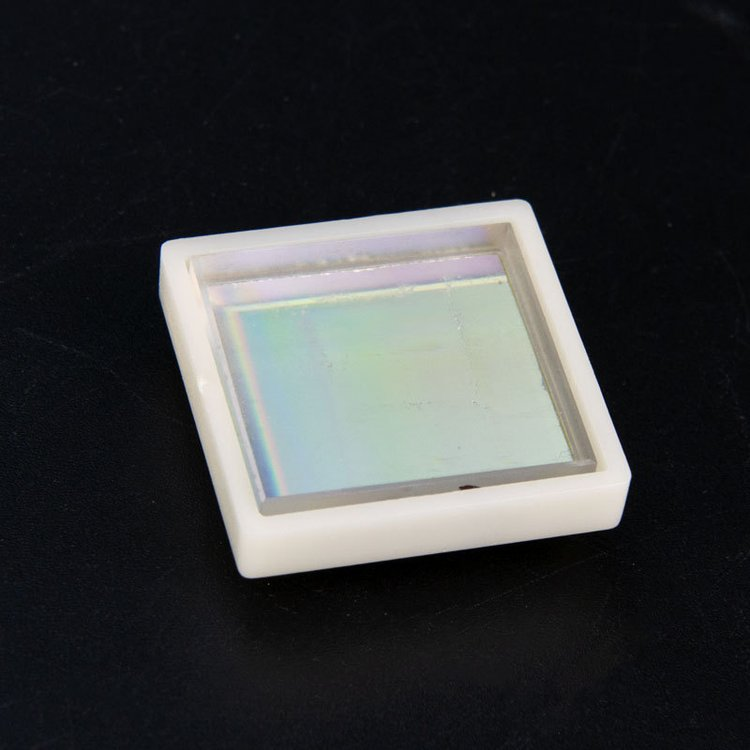
grating Technology plays an important role in modern physics and engineering technology, and is widely used in spectral analysis, laser systems, imaging equipment and other fields. By understanding the principle of grating, we can not only reveal its basic applications in these fields, but also dig deeply into the technical logic and engineering value behind it. This paper will discuss the working mechanism of grating principle in detail, and analyze its application in practical engineering.
1、 Basis of grating principle
Grating is a kind of optical element with periodic structure engraved on the surface, which changes the propagation direction of light through the diffraction phenomenon of light. Its basic working principle is based on the wave of light, especially the diffraction and interference effects.
- Diffraction phenomenon: When the light wave is emitted into the grating, due to the periodic structure of the grating (i.e. notch spacing), the light wave will diffract on each notch. Light of different wavelengths will show different diffraction patterns according to different diffraction angles.
- Diffraction equation: The diffraction angle is related to the wavelength of the light wave and the notch spacing of the grating. The specific diffraction angle can be described by the diffraction equation of the grating: m λ=d (sin θ m − sin θ 0) mλ = d (sin θ m −sin θ 0) where, m m Is the diffraction order, λ λ Is the wavelength of the light wave, d d Is the notch spacing of the grating, θm θ m And θ 0 θ 0 is the angle of diffracted light and the angle of incident light, respectively.
- Grating constant and resolution: The resolution of grating is closely related to its notch density (notch spacing). The smaller the notch spacing, the higher the resolution of grating. Therefore, gratings are often used to accurately measure light of different wavelengths.
2、 Classification of gratings
- Transmission grating and reflection grating: Grating can be divided into transmission grating and reflection grating according to the propagation mode of light. The transmission grating allows light to pass through its structure, while the reflection grating reflects light on the grating surface. Different types of gratings have their own advantages in different applications.
- Periodic and aperiodic gratings: The notch spacing of periodic gratings is consistent, while non periodic gratings have an irregular structure. In some special applications, the diffraction effect of aperiodic gratings is more complex and can produce some unique diffraction characteristics.
3、 Engineering application of grating
- Spectral analysis: Grating is widely used in spectrometers to decompose light of different wavelengths into different spectral lines. Through the diffraction effect of the grating, the emission spectrum or absorption spectrum of the material can be accurately measured to analyze the composition and properties of the material. This is of great value in chemical analysis, astronomy, environmental monitoring and other fields.
- Laser system: In the laser system, grating is used as a tuning device to control the frequency and wavelength of the laser. By adjusting the angle of the grating, the frequency tuning of the laser can be realized to meet specific engineering requirements. For example, in the lidar system, the grating can accurately adjust the wavelength of the light source, and improve the measurement accuracy and sensitivity of the system.
- Imaging and display: In some high-precision imaging systems, gratings are used to improve the pixel resolution, especially in display devices that need large resolution, gratings can optimize the direction of light propagation, improve the display effect and accuracy.
- Optical communication: Grating also plays an important role in fiber communication. Grating can control the propagation direction and wavelength of optical signal through diffraction and reflection, optimize the signal transmission quality, and reduce the signal loss, especially in long-distance transmission.
- astronomy: In astronomical observation, grating is an indispensable tool. The grating can be used to analyze the light of distant celestial bodies, so as to obtain the chemical composition, temperature, speed and other information of stars, planets and other celestial bodies. Grating spectrometer has become one of the most important observation equipment in modern astronomy.
4、 Technical Challenges and Development Direction of Grating
Although gratings are widely used in many fields, they still face some technical challenges in practical use:
- Balance between high resolution and large bandwidth: With the increasing demand for high resolution spectral analysis, the design requirements of gratings are becoming higher and higher. How to maintain a wide bandwidth (that is, a wide spectral range) while maintaining high resolution is a difficult problem in current grating technology.
- Progress of micro/nano processing technology: The precision and performance of grating depend on its machining precision to a great extent. With the development of micro nano processing technology, more refined gratings can be produced, which will further improve their performance in high-end applications.
- Application of new materials: The performance of grating depends not only on the design of structure, but also on the selection of materials. Researchers are exploring new materials, such as photonic crystal materials and metamaterials, to improve the diffraction efficiency, resolution and durability of gratings.
5、 Conclusion
As a basic optical principle, grating principle plays a key role in many engineering fields. Through in-depth understanding of its working principle, classification, application and development challenges, we can better use grating technology to meet the needs of modern science and technology. With the continuous development of related technologies, gratings will play an important role in a wider range of fields, promoting the development of optics and engineering technology.